2026 BUSINESS GUIDE
Supermarket Setup Cost in the UAE: What You Need to Know
Opening a supermarket in the UAE can be a strong business opportunity, especially in high-demand retail areas across Dubai, Abu Dhabi, Sharjah, Ajman, Ras Al Khaimah, and other growing communities.
However, the total investment involves much more than rent and products. A successful supermarket requires smart layout planning, commercial refrigeration, shelving systems, checkout counters, lighting, signage, cold rooms, and professional fit-out.
The supermarket setup cost in the UAE usually depends on the store size, location, refrigeration system, shelving requirements, fit-out quality, licensing requirements, and the level of customization needed for the project.
This guide explains the main cost factors and helps you understand how much budget you may need before starting your supermarket project in the UAE.
See Cost Breakdown
Get Free Consultation
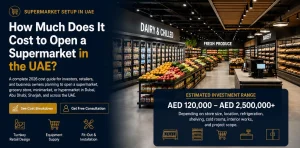
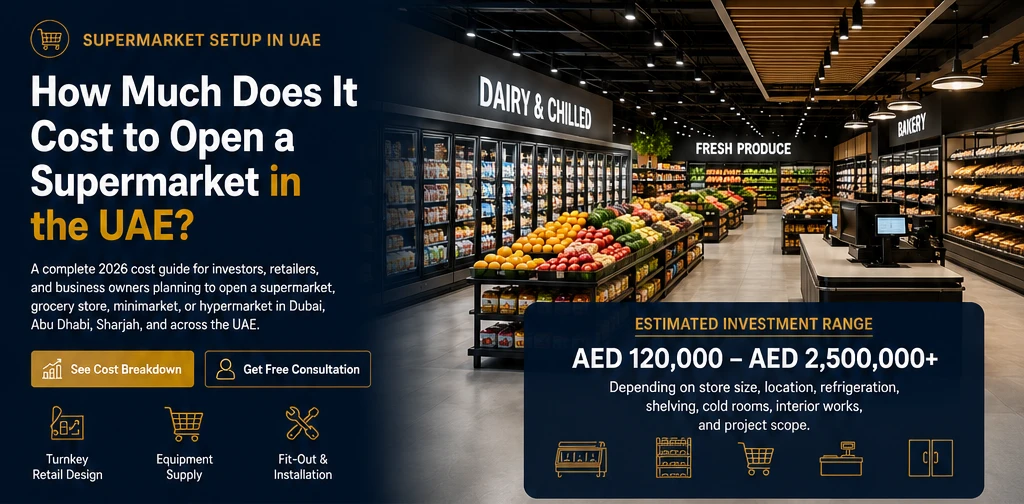
Estimated Investment Range
AED 120,000 – AED 2,500,000+
Depending on store size, location, refrigeration, shelving, cold rooms, interior works, and the overall project scope.
- Turnkey Retail Design
- Equipment Supply
- Fit-Out & Installation
INVESTMENT ESTIMATE
Average Cost to Open a Supermarket in the UAE
The figures below are general investment ranges provided for initial planning purposes. Final costs depend on the project size, emirate, location, equipment level, refrigeration requirements, interior specifications, and customization.
| Store Type | Typical Size | Estimated Investment | Recommended For |
|---|---|---|---|
| Small Minimarket | 100–300 sqm | AED 120,000 – AED 300,000 | Neighborhood stores, residential communities, convenience stores, and compact grocery concepts. |
| Medium Supermarket | 300–800 sqm | AED 300,000 – AED 1,000,000 | Full grocery stores with fresh food departments, chilled displays, shelving systems, and multiple checkout areas. |
| Large Supermarket | 800+ sqm | AED 1,000,000 – AED 2,500,000+ | Larger retail operations, hypermarket formats, destination supermarkets, and multi-department stores. |
These estimates may not include inventory purchasing, long-term rental commitments, staff recruitment, marketing campaigns, or operating capital required after opening.
MAIN COST FACTORS
What Affects the Cost of Opening a Grocery Store in the UAE?
01. Location and Rent
Prime areas in Dubai, Abu Dhabi, or other high-traffic commercial zones usually require higher rental investment. However, the right location can significantly improve store visibility, accessibility, customer traffic, and long-term sales potential.
Rental costs may also vary depending on the size of the unit, parking availability, building type, surrounding population, lease conditions, and whether the property is already suitable for food retail operations.
02. Store Design and Layout
A professional supermarket layout improves customer flow, product visibility, basket size, operational efficiency, and the use of available floor space.
The layout should define the position of shelving, fresh food departments, refrigerators, freezers, checkout counters, storage areas, staff rooms, entrances, exits, and promotional zones before equipment is ordered.
03. Commercial Refrigeration
Refrigerated displays, freezers, multideck chillers, serve-over counters, cold rooms, condensing units, and cooling systems are often among the largest investment areas in a supermarket project.
The final refrigeration cost depends on the number of departments, product categories, required temperatures, equipment dimensions, cooling capacity, energy-efficiency level, and whether the project uses plug-in or remote refrigeration systems.
04. Shelving and Retail Fixtures
Wall shelving, gondola shelving, end-cap displays, promotional units, checkout counters, bakery displays, fruit and vegetable units, and fresh food counters help define the customer experience.
Equipment quality, shelf height, load capacity, finish, dimensions, accessories, branding, and customization all affect the final budget.
05. Fit-Out and Interior Works
Flooring, ceiling works, lighting, electrical systems, plumbing, HVAC, MEP works, branding, signage, installation, painting, partitions, and decorative finishes can significantly affect the total supermarket setup cost.
Older or unfinished retail units may require more extensive construction and infrastructure work before equipment installation can begin.
06. Licensing and Approvals
Trade licensing, municipality approvals, food safety requirements, civil defense approval, signage permits, and other local compliance requirements should be considered during the early planning stages.
Requirements may vary depending on the emirate, store size, food departments, building conditions, and the exact activities included in the trade license.
BUDGET PLANNING
Typical Supermarket Budget Allocation
Although every supermarket project is different, most investments follow a similar cost structure. Equipment, refrigeration, and fit-out frequently represent the largest share of the overall budget.
| Investment Category | Typical Budget Allocation |
|---|---|
| Refrigeration and Cold Rooms | 25–35% |
| Shelving and Store Equipment | 15–25% |
| Fit-Out and Interior Works | 20–30% |
| Design, Branding and Signage | 5–10% |
| Licensing, Setup and Contingency | 10–15% |
Planning Tip: Keep a contingency budget for unexpected MEP modifications, authority requirements, equipment changes, delivery costs, and site conditions discovered during installation.
ESSENTIAL EQUIPMENT
Equipment Needed to Open a Supermarket in the UAE
Choosing the right equipment from the beginning helps reduce energy waste, improve product presentation, support daily operations, and protect the long-term performance of the store.
- Commercial refrigerators and freezers
- Multideck chillers and frozen food displays
- Glass-door freezers and upright refrigerators
- Cold rooms and commercial cooling systems
- Supermarket wall and gondola shelving systems
- End-cap and promotional display units
- Checkout counters and POS areas
- Bakery and pastry display counters
- Butchery and fresh food service counters
- Fruit and vegetable display units
- Commercial lighting systems
- Interior and exterior signage
- Shopping carts, baskets, and customer accessories
- Stainless-steel preparation tables and sinks
- Storage shelving and back-of-house equipment
Equipment should be selected according to the approved store layout, expected customer volume, product range, electrical capacity, available floor space, and future expansion plans.
SMART INVESTMENT
How to Reduce Supermarket Setup Costs Without Reducing Quality
Start with a Professional Layout
A poor layout can waste valuable retail space and reduce sales performance. Professional planning helps determine exactly how much shelving, refrigeration, and checkout equipment the store needs.
It also reduces the risk of buying equipment that is too large, too small, or unsuitable for the available space.
Choose Energy-Efficient Refrigeration
Refrigeration operates continuously and can represent a major part of a supermarket’s monthly electricity consumption. Energy-efficient systems may require a higher initial investment but can reduce long-term operating costs.
Proper installation, temperature control, insulation, maintenance access, and airflow are equally important for efficient performance.
Use One Turnkey Project Partner
Working with one coordinated team for layout design, 3D visualization, equipment supply, refrigeration, fit-out, installation, and project management can reduce communication problems and costly delays.
A turnkey approach also helps ensure that dimensions, technical requirements, MEP connections, and equipment installation are coordinated before work begins.
Prioritize Customer-Facing Areas
Focus the main investment on areas that directly affect customer experience, product visibility, food safety, and store operations. Decorative elements can often be simplified without compromising the quality of essential systems.
Plan for Future Expansion
A flexible layout and modular equipment system can make future changes easier. This is particularly valuable when adding new departments, increasing product capacity, or changing the store concept.
WHY DINA GROUP
Open Your Supermarket in the UAE with One Expert Partner
Dina Group supports supermarket, minimarket, grocery store, and hypermarket projects from initial concept to opening.
Our team provides 2D layout design, 3D visualization, supermarket equipment, commercial refrigeration, shelving systems, cold rooms, fit-out, lighting, signage, installation, testing, handover, and after-sales support.
Instead of managing multiple suppliers and contractors, you receive one coordinated project team focused on speed, quality, budget control, technical accuracy, and a better customer experience.
From Concept to Checkout
Retail design, equipment, refrigeration, fit-out, installation, and after-sales support for modern supermarkets across the UAE.
- Initial project consultation
- Professional 2D store layout
- MEP and technical coordination
- 3D supermarket visualization
- Commercial refrigeration and cold rooms
- Supermarket shelving and display equipment
- Checkout counters and customer accessories
- Lighting, signage, and branding
- Fit-out and installation
- Testing, handover, and after-sales support
START YOUR PROJECT
Planning to Open a Supermarket in the UAE?
Get expert guidance on supermarket layout, equipment selection, refrigeration, shelving, fit-out, and estimated project cost before you invest.
Dina Group can review your available retail space, business concept, target product range, preferred departments, and budget to help you create a practical project plan.
FAQ
Frequently Asked Questions
How much does it cost to open a small grocery store in the UAE?
A small grocery store or minimarket in the UAE may require an estimated investment of around AED 120,000 to AED 300,000, depending on the store size, location, refrigeration, shelving, equipment, and fit-out quality.
What is the biggest cost when opening a supermarket?
Commercial refrigeration, cold rooms, shelving systems, electrical and MEP works, fit-out, and interior construction are usually among the largest cost areas in a supermarket project.
Is opening a supermarket in the UAE profitable?
A supermarket can be profitable when it has the right location, product mix, pricing strategy, customer flow, operating system, and cost control. Professional design and efficient equipment can also improve store performance.
Do I need professional supermarket design before buying equipment?
Yes. A professional supermarket layout helps define the correct equipment quantity, product zones, customer journey, aisle widths, checkout placement, refrigeration requirements, storage areas, and technical connections.
How long does it take to set up a supermarket in the UAE?
The timeline depends on the store size, site condition, approval process, equipment availability, customization, and scope of fit-out. Smaller projects may be completed faster, while larger supermarkets usually require more design, manufacturing, and installation time.
Does the estimated setup cost include supermarket inventory?
In most cases, supermarket setup estimates cover design, equipment, refrigeration, shelving, fit-out, and installation. Product inventory, rental deposits, staff costs, marketing, and working capital should normally be calculated separately.
Can Dina Group handle supermarket projects in the UAE?
Yes. Dina Group provides turnkey supermarket design, equipment supply, commercial refrigeration, shelving, cold rooms, fit-out, installation, and after-sales support for retail projects across the UAE and GCC.
Ready to Start Your Supermarket Project?
Share your store size, location, business concept, and required departments with Dina Group to receive professional guidance for your next retail project.